{Closing Film }
SAT 24 SEP | 5:45pm / Singapore Premiere
FRANCE 2015
200 mins
M18 (Some Mature Content)
English and French with English subtitles
Director: Yann Arthus-Bertrand
Synopsis
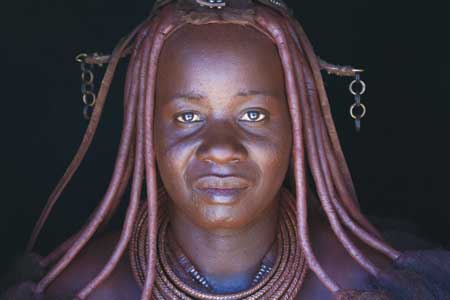 Over a span of three years, emotional life stories were collected from more than 2,000 women and men in 60 countries in an attempt to answer the question: What is it that makes us human?
The result is Human, a documentary film that weaves together heartfelt testimonies from freedom fighters in Ukraine, farmers in Mali, death row inmates in the United States, and more — on the struggles and triumphs that unite us all: love, death, happiness, homophobia, war, poverty, and the future of our planet.
Through exclusive aerial footage showing our planet Earth at its most sublime, this epic record of our collective human experience allows us to embrace the human condition and redefine the meaning of our existence.
Director’s Bio
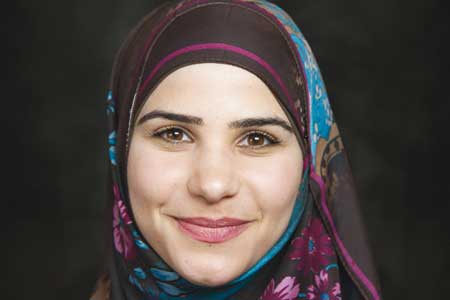 French photographer, filmmaker, journalist and environmentalist, Yann Arthus-Bertrand started his career photographing lions in Kenya in the 1980s. In 2006, he started the television documentary series Vu Du Ciel, exploring environmental problems, before embarking on his debut feature film, Home (2009), about the state of our planet. He directed Forest (2001) and Desertification (2012) for the United Nations, and co-directed A Thirsty World (2012) which narrates the history of water and the water crisis of our century. For Rio + 20, Yann co-directed the film Planet Ocean (2012). Terra (2015) retells the incredible story of life on Earth. A renowned specialist in aerial photography, Yann is recognised worldwide as one of the most important and respected environmentalists of our time.
Director’s Statement
I dreamed of a film in which the power of words would resonate with the beauty of the world. Putting the ills of humanity at the heart of my work – poverty, war, immigration, homophobia – I made certain choices. Committed, political choices. But the subjects talked to me about everything: their difficulty in growing as well as their love and happiness. This richness of the human word lies at the heart of Human. This film relates the voices of all the men and women who entrusted me with their stories. And it becomes their messenger.
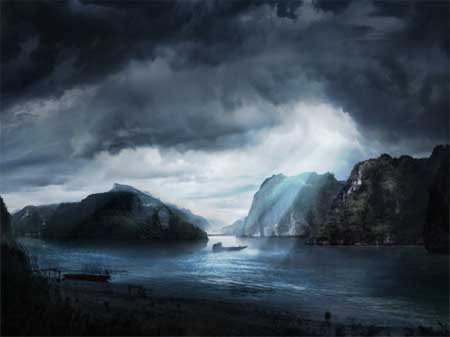
 Crosscurrent follows the winter journey of a small cargo boat sailing up the Yangtze River.
 Yang Chao, a graduate of the Directing Department of Beijing Film Academy, is a director and writer who is known for Run Away (2001), his debut short film, which won the Film Fund Young Directors Award at the 54th Cannes Film Festival. Passages (2004), his writing and directing feature length debut, won the Camera d’Or Special Mention at the 57th Cannes Film Festival and was screened at some other festivals. He also directed Yulai Little Hero in 2008.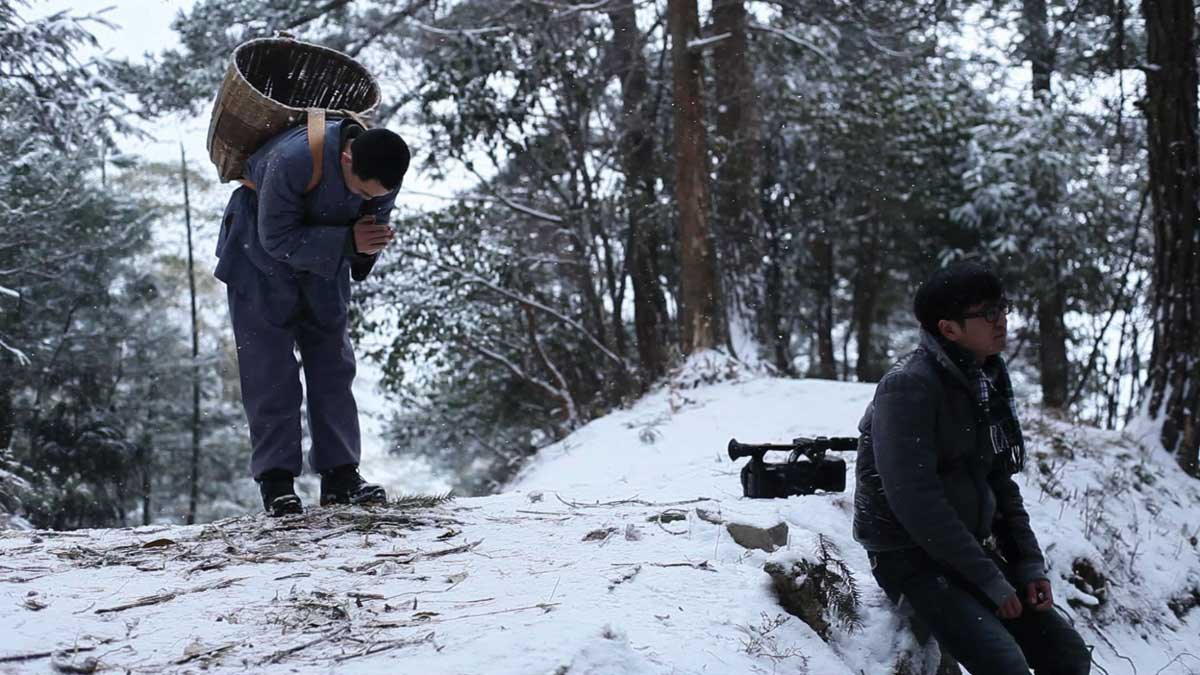
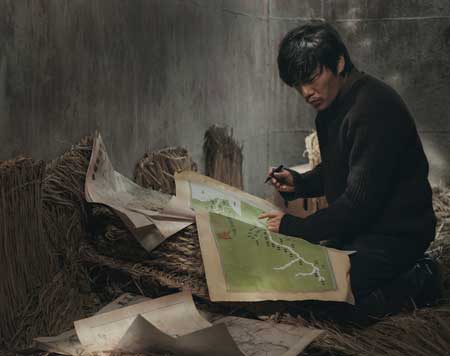
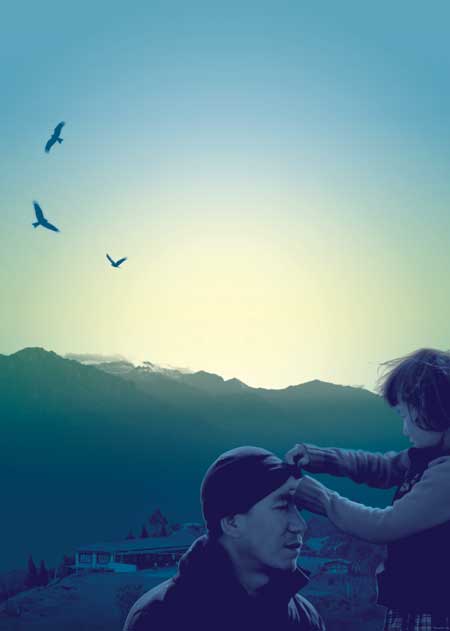
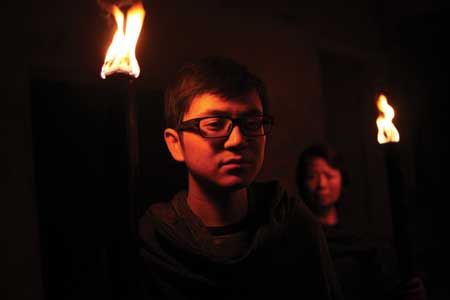 A young filmmaker returns to China after his brother dies in a fire back home. He travels from the bustling metropolis of Shanghai to a remote monastery on the snowy Tian-Mu Mountain, where he reunites with his mother. His encounters with different people in the monastery become a subtle, intimate and mysterious study on the human condition.
 Zhou Hongbo graduated from the Beijing Film Academy with a master’s degree in 1999. His graduation film, A Fish Who Wants To Fly, was selected for the 53rd Cannes Film Festival, Cinéfondation category. Since then, Zhou has made several features and documentaries. They were screened at various international film festivals. Winter Cicadas is his second feature film. His works focus on the transitions of Chinese urbanisation, exploring not only the physical but also the spiritual change of contemporary China and her people.
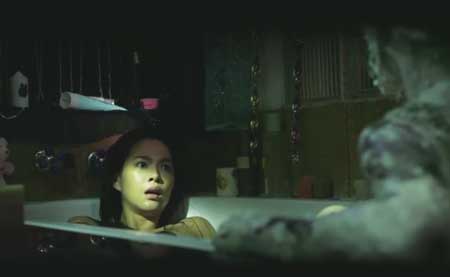 Alone in her room, 20-year-old Nuknik wallows in her frustrations with her divorced parents and a failed relationship with her boyfriend. She attempts to commit suicide, but gets distracted by a large pimple on her nose. Being obsessed with how others view her, the discovery of her pimple sets Nuknik on a journey into the imperfections of the world and herself, where she battles with the core of her existence.
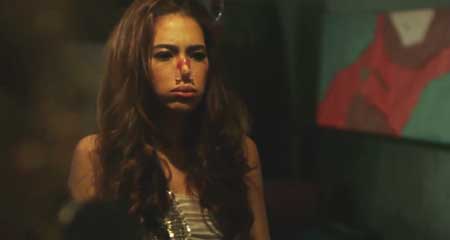 Prior to being a filmmaker, Amorn Harinnitisuk was an avant-garde creative director during his 19 years of TV work. He directed commercials for international advertising agencies Saatchi & Saatchi, and Ogilvy & Mather. After that, he devoted his creative energies to making experimental films such as Made in Heaven (2008), and Sperm Saves the World (2010) which was in competition at I’ve Seen Films IFF in Italy and was screened at Gogolfest in Ukraine. He went on to develop feature films, one of which is Doggod & Full Water (2011).
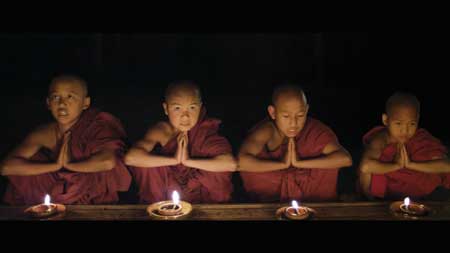
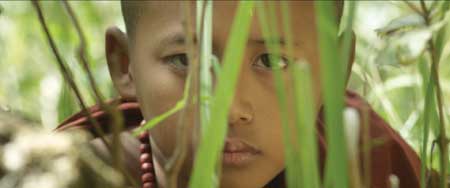 Four orphan boys, all novice monks, live in a Buddhist monastery in the remote mountains of Northeast Myanmar. The head monk departs on a long journey from which he may never return. Once the boys are on their own, magical phenomena begin to occur. Witazara, the eldest, realises he must protect the three other boys, as a series of peculiar events threatens to unravel the fabric of the young monks’ reality.
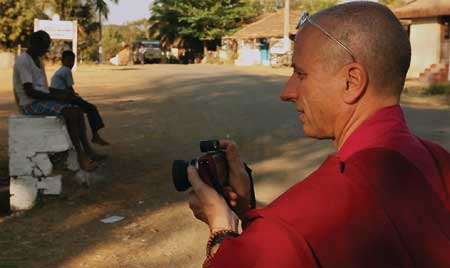
 American filmmaker Brian Perkins has traveled extensively through the remote parts of Asia and India.
 This feature documentary chronicles the life and spiritual quest of Nicholas “Nicky” Vreeland, grandson of legendary Vogue editor Diana Vreeland. A glamorous social photographer at the age of 30, he walked away from a life of privilege and pleasure to become a monk at the Rato Monastery in India.
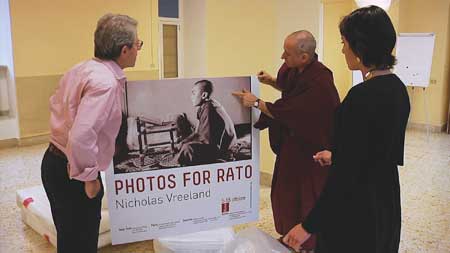 Guido Santi started his career working as an apprentice with Ipotesi Cinema. He wrote and directed Concertino, a film about four teenagers living in the suburbs of Rome, for RAI, Italy’s national television network. After receiving his Master’s degree in Film Production at the University of Southern California, Guido has produced and directed documentaries and TV specials, as well as a feature film.
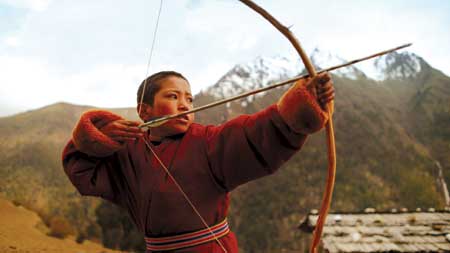 Peyangki is a dreamy and solitary eight-year-old monk who has never
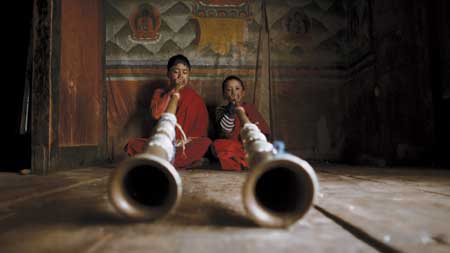 Thomas Balmès has been working as an independent director, cinematographer and producer of non-fiction films since 1992. His initial projects included studies of filmmakers James Ivory and Michelangelo Antonioni.
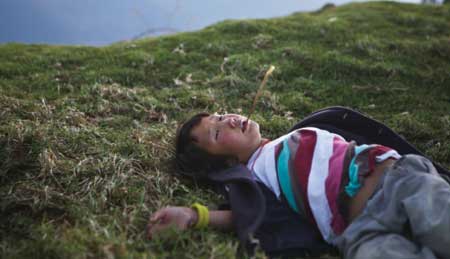 On a remote mountaintop a brave social experiment is taking place.
 Andrew Hinton began his career in filmmaking working on documentary and drama productions for Pawel Pawlikowski and Marc Isaacs, before moving on to performance films and musical feature documentaries. He lived on an Indian train to document the Jagriti Yatra, a journey around India with 500 young social entrepreneurs; then followed a paperboy in Jamshedpur for a day, creating the short film Amar (2011) which won the Vimeo Documentary Award.
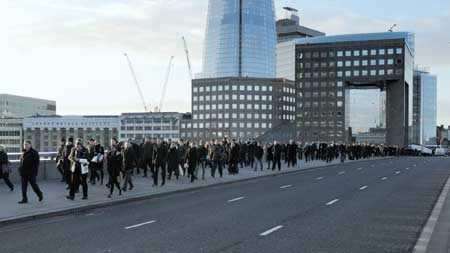
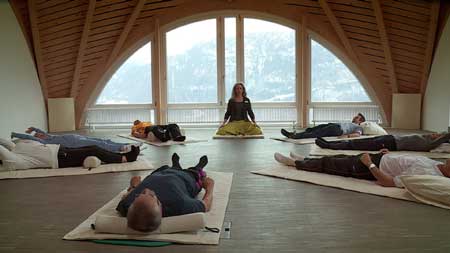 It sounds like the perfect antidote to our hectic lives: less stress, better concentration, increased productivity. No wonder mindfulness meditation has become an attractive addition to the boardroom agenda for global giants like Google and SAP. Backed up by science, corporate organisations are rapidly turning to mindfulness to help develop their business model.
 Samuel Stefan holds a Master of Science in Psychology and has a broad range of filmmaking experience in writing, directing, producing and editing. He lives and works near Berne, Switzerland as an independent filmmaker and a lecturer in psychology. Besides working on documentary projects, he is a freelance director and editor for commercials, image films and TV reality series.
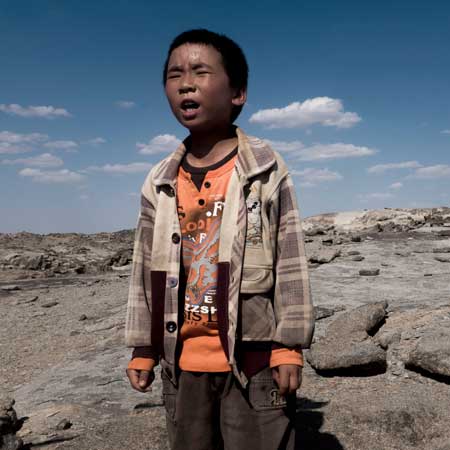 Two Yugur ethnic minority brothers embark on a road trip across desertified prairies with their camels, passing through the Silk Road to go home to their parents. They trek from their grandfather’s home near town to the distant grasslands where their parents have moved to find pastures to herd their sheep. The two boys are confronted with barren landscapes, abandoned villages, and decaying relics. Their journey becomes a search for their identity as Yugurs.
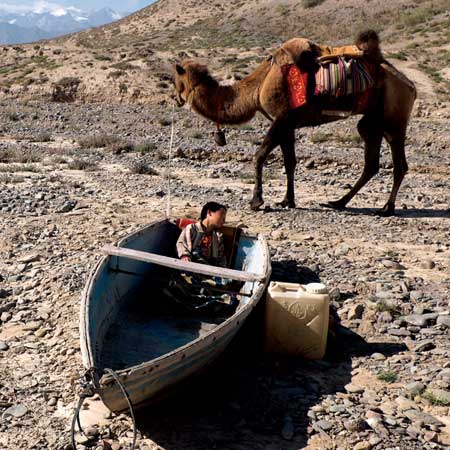 Li Ruijun was born in Gansu Province, China in 1983. At the age of 14, he studied painting and music. In 2003, he graduated from the Institute of Management of China National Ministry of Radio, Film and Television. For several years he has been working as a TV director. He has directed four films: The Summer Solstice (2007), The Old Donkey (2010), Fly with the Crane (2012) and River Road (2014). Showcasing the haunting beauty and the wild abandon of north-western China, his works tend to focus on the relationship between human beings and the land, as well as the rural attitude towards family, life and death in a fast changing China.