SUN 18 SEP | 5:00pm / Singapore Premiere
USA 2010
90 mins
PG13 (Brief Nudity)
Multiple languages with English subtitles
Director: Frederick Marx
There will be a post-screening discussion with a film representative
Synopsis
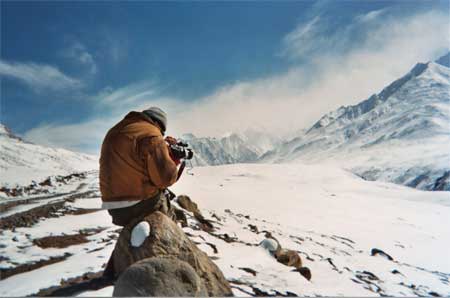 One of the last places on Earth where the original Tibetan Buddhist way of life still exists, Zanskar’s inaccessibility and isolation have protected it from cultural change. Two monks select 17 children aged 4 to 12 who will separate from their families for most of their lives to receive education, so that their cultural heritage will not be lost. With yaks and horses, they embark on an almost impossible ten-day trek through the deep snow of the Himalayas.
With a guest appearance by the Dalai Lama himself, this remarkable journey witnesses the amazing resilience of the people of Zanskar. See them laugh in the face of crushing disappointment; hear the children sing while riding into a dangerous, unknown future.
Director’s Bio
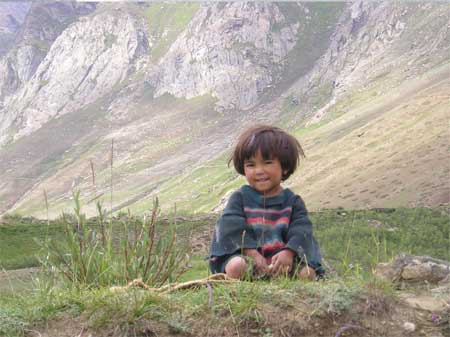 Frederick Marx is an internationally acclaimed, Oscar and Emmy nominated producer/director with 35 years in the film business. He was named a Chicago Tribune Artist of the Year for 1994, a 1995 Guggenheim Fellow, and a recipient of a Robert F. Kennedy Special Achievement Award. Hoop Dreams (1994) is his first documentary film exploring the welfare of teenage boys.
Along with Journey from Zanskar, his interest in foreign cultures is reflected in PBS’ international human rights program Out Of The Silence (1991) and the widely acclaimed personal essay Dreams From China (1989). Marx, a true maverick who dedicated his life to the making and promotion of independent films, continues to provide a voice of artistic and social integrity.
Director’s Statement
“How far would you go to save your dying culture?”
“Sometimes you have to give up your kids in order to save them.”
It took a long journey to arrive at the simplicity of those two statements, but the film didn’t start out with them as the central ideas.
The story of the trek as it appears in the film is our story too. The uncertainties, the cold, the disappointments, the fears – those were ours too. There were times in the two years prior to completion when, overwhelmed with anxiety and stress over how I was going to finish the film, I would drop my head to my desk and weep. The one thing that always pulled me through was the film itself.

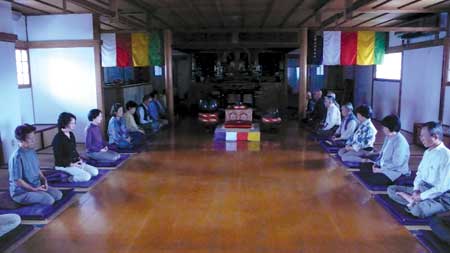 In the beginning of the 20th century, Japan waged a number of wars, which culminated in the Second World War.
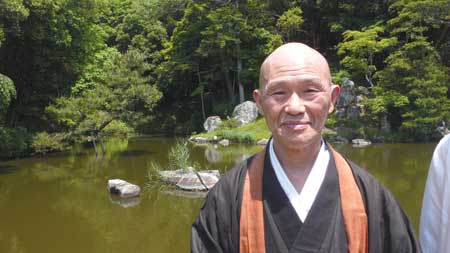 Alexander Oey works as a documentary filmmaker for several broadcasters in the Netherlands. He has made films about a wide range of subjects such as art, terrorism, economics and social issues. Films that were shown at international festivals include Hans Joachim Klein, My Life as A Terrorist (2005), There’s No Authority But Yourself (2006), Zen and War (2009), Off the Grid (2011), The Bollywood Revolution (2011), Goldman Sachs and the Destruction of Greece (2012), and Pekka (2014). He frequently contributes to VPRO’s Backlight series. His subjects usually cover a wide range of subjects, mainly in the socio-political or anthropological domain.
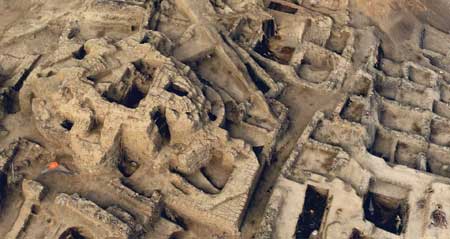
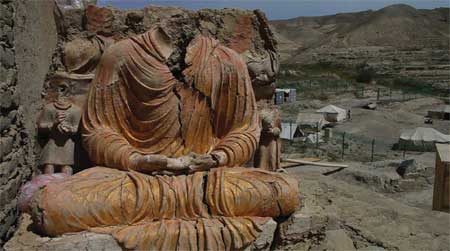 Saving Mes Aynak follows Afghan archaeologist Qadir Temori as he races against time to save a 5,000-year-old archaeological site in Afghanistan from imminent destruction. A Chinese state-owned mining company plans to mine the copper deposits beneath it; the operation will demolish the ancient city together with the entire mountain range.
 Brent E. Huffman is an award-winning director, producer and cinematographer of documentaries and television programs. His work ranges from documentaries aired on The Discovery Channel, The National Geographic Channel, NBC, CNN, PBS and Al Jazeera, to Sundance Film Festival premieres, to ethnographic films made for the China Exploration and Research Society. He has also directed, produced, shot, and edited short documentaries for online outlets like The New York Times, TIME, Salon, Huffington Post and PBS Arts.
 How many people can really say they know the man and not just the religious giant he is?
 Fujiro Mitsuishi graduated from Nihon University, majoring in Literature and Science. While he was working as an assistant director in films and TV dramas, he was influenced by outstanding directors such as Ryuchi Hiroki and Tasumi Kumashiro. His fourth directorial work Ogya (2002) received the Netpack Award at the Hawaii International Film Festival and his seventh film Osaka Hamlet (2008) received special mention at the Tokyo International Film Festival. He writes scripts, novels, poems and stories for manga. The Dalai Lama the 14
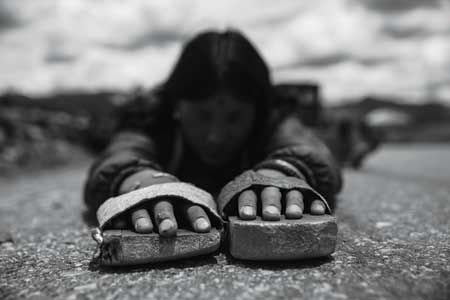
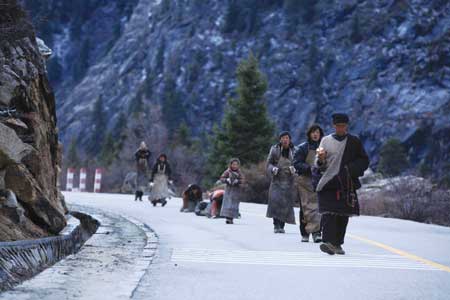 Paths of the Soul chronicles an extraordinary journey by Tibetan villagers on a gruelling 2,000 kilometre pilgrimage to the holy capital of Lhasa.
 Zhang Yang is one of the pioneers of the underground Chinese music video scene and can be ranked among the greatest of the new generation of Chinese filmmakers. After graduating in 1992 from the Central Theatre Academy in Beijing, he directed the well-known play Kiss of the Spider Woman. He made his first feature length film, Spicy Love Soup, in 1997, and won several prizes with it in China. Shower (1999) won an Audience Award at the International Film Festival Rotterdam, and Sunflower (2005) won him the award for Best Director at the San Sebastián International Film Festival.
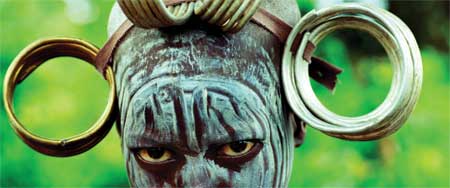 Samsara, Sanskrit for “the ever turning wheel of life”, is the point of departure for the filmmakers as they search for the elusive current of interconnection that runs through our lives.
 Ron Fricke is an American film director and cinematographer, specialising in time-lapse photography and large format cinematography. He was the director of photography for Koyaanisqatsi (1982) and directed the purely cinematic non-verbal non-narrative feature Baraka (1992), in which he designed and used his own 65 mm camera equipment. He also directed the IMAX films Chronos (1985) and Sacred Site (1986). He was the cinematographer for parts of the film Star Wars: Episode III – Revenge of the Sith (2005), in which he was hired to shoot the eruption of Mt. Etna in Sicily for use in scenes of the volcanic planet Mustafar. A sequel to Baraka, Fricke conceived Samara as a guided meditation on the cycle of birth, death and rebirth.